
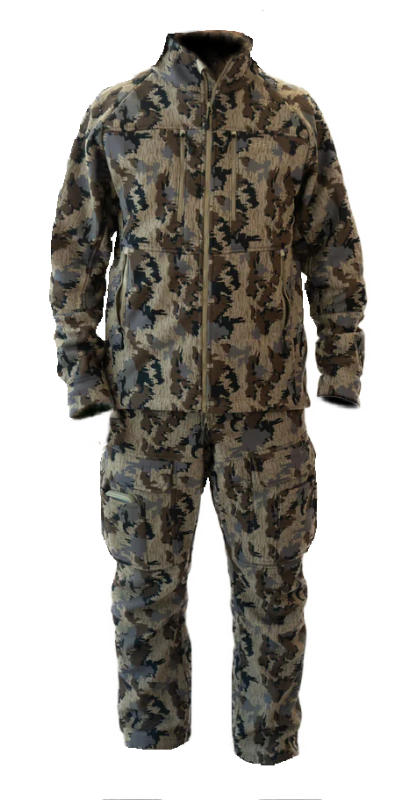
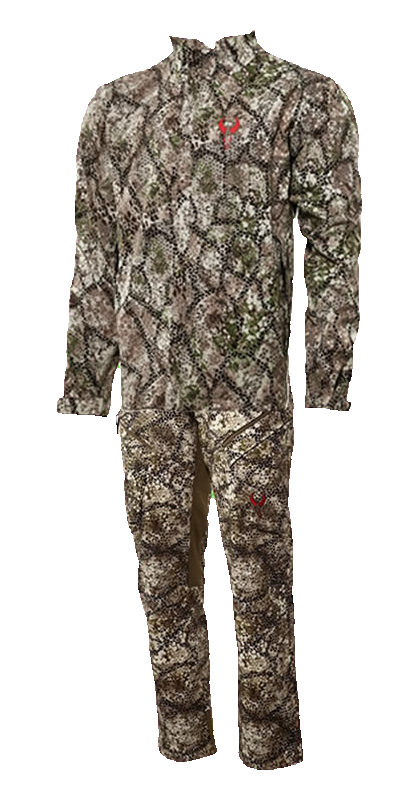
Cheli Coppice runs macro-scale, while Badlands Approach leans more mixed-scale, giving each a slightly different feel at various distances. Cheli Coppice leans toward larger, macro-scale blocks, while Badlands Approach balances micro and macro elements, which shifts how each holds up in close cover versus more open sightlines. They are also similar in overall density, so neither one is dramatically busier or more open.
Cheli Coppice vs Badlands Approach
Cheli Coppice and Badlands Approach have been analyzed using our CamoMatrix AI engine, which measures scale, density, and edge behavior directly from the flat pattern artwork. Cheli Coppice reads more macro-scale, while Badlands Approach trends mixed-scale. In the field this usually influences how a pattern holds together in tight cover versus more open terrain. Density is similar, so neither pattern overwhelms the eye or leaves too much empty space. Cheli Coppice's scale index trends a touch higher, making its breakup blocks slightly larger than those in Badlands Approach. Badlands Approach lands slightly higher on the density index, adding a bit more visual texture. That can help in chaotic or brushy terrain where extra breakup is useful. As always, these results come from flat pattern imagery. Real-world performance depends heavily on terrain, season, and how the garments fit and move.
This is a pattern-only comparison from flat artwork. Terrain, season, and real backgrounds will still push one or the other ahead in specific setups.

Learn how the CamoMatrix AI evaluates camouflage patterns
Defines the dominant size of shapes in the pattern.
Indicates which scale range the pattern leans toward overall.
How busy the pattern is with shapes and noise.
How hard or soft shape boundaries are.