When to Replace Your Hunting Boots (and What to Replace Them With)
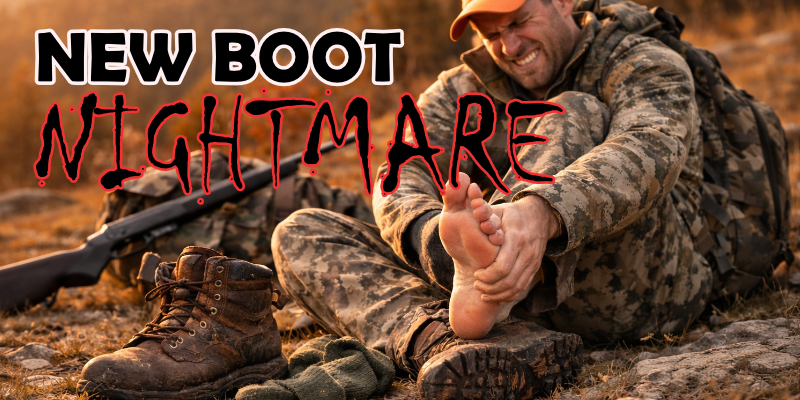
Most hunters don’t replace boots when they should — they replace them when they have to. A blown seam two days before opening morning. A sole that suddenly feels flat halfway up a ridge. A hot spot that turns into a blister before the sun’s even up.
The truth is, boot replacement should start months before the hunt, not days before it.
Quality hunting boots aren’t meant to feel perfect straight out of the box. Leather needs time to flex and soften. Insoles need miles to settle. And your feet need time to reveal exactly where pressure points show up. That break-in period almost always comes with some discomfort — tight spots, stiffness, or mild hot spots — but that’s part of the process.
The key is letting those issues surface early, when you still have time to fix them. Short walks around the house, trips to town, yard work, or easy hikes are all perfect ways to start. Gradually increase distance and terrain, paying attention to how your feet feel and where friction develops. This is the stage where adjusting lacing, sock thickness, or insoles can make a big difference.
Breaking boots in slowly also helps prevent real injuries. Blisters, bruised heels, and sore arches are manageable during preseason walks — but in the field, they can end a hunt early. By the time opening day arrives, your boots should feel familiar, flexible, and predictable, not like a question mark on your feet.
That’s why now is the right time to think about boots. When you have plenty of time to wear them, tweak them, and trust them — instead of learning hard lessons miles from the truck.
Boot Break-In Checklist: What to Do Before Opening Day
No matter what style of hunting boot you choose, the goal of break-in is the same: eliminate surprises. The process doesn’t need to be complicated, but it does need to be intentional. Use the checklist below to get boots field-ready without learning hard lessons mid-hunt.
General Break-In Rules (All Boots)
- Start with short wear periods (30–60 minutes) before longer walks
- Wear the same socks you plan to hunt in
- Pay attention to hot spots, heel slip, or pressure points
- Adjust lacing techniques before assuming a fit problem
- Test boots on uneven ground, not just flat surfaces
- Never take brand-new boots on a multi-mile hunt
Breaking In High Leather Hunting Boots
Leather boots take the longest to break in, but they also reward patience. Early stiffness is normal, especially around the ankle and toe box.
- Wear them casually at home to soften the leather before hiking
- Start with light walks, then gradually add hills and side-hilling
- Expect some ankle stiffness early — this usually fades with use
- Consider applying leather conditioner once flex points begin to loosen
- Check for heel lift or lace bite as the boot starts to break in
Best tip: Leather boots don’t break in evenly — let them tell you where adjustments are needed.
Breaking In Rubber & Waterproof Boots
Rubber boots don’t “break in” the same way leather does, but fit and movement still matter.
- Focus on testing fit and calf comfort rather than flexibility
- Wear them for extended periods to check heat buildup
- Walk on uneven and muddy ground to evaluate stability
- Make sure socks manage moisture well, since rubber doesn’t breathe
- Confirm there’s enough room for thicker socks without heel slip
Best tip: If rubber boots feel uncomfortable early, they rarely improve — fit is critical.
Breaking In Lightweight Hiker-Style Boots
Hiker-style boots and shoes break in quickly, but they still need testing under real hunting conditions.
- Use them on longer walks and hikes early to test foot fatigue
- Pay attention to arch support and underfoot feel
- Test them with a loaded pack to simulate hunting weight
- Make sure traction performs on loose dirt, rock, and side slopes
- Confirm ankle comfort during long descents and uneven terrain
Best tip: Lightweight boots reveal problems fast — fix them early or swap them out.
Final Break-In Reality Check
If your boots still cause pain after several weeks of regular wear, it’s a sign they’re not the right match for your feet or hunting style. Good boots should feel predictable and trustworthy by the time the season starts — not like something you’re hoping will work out.
Below are several Rocky boots that cover the full spectrum of hunting styles — from cold sits to wet ground to mobile mountain hunts — each filling a specific role depending on how and where you hunt.
A Classic High-Leather Hunting Boot
Rocky BearClaw 400G Insulated Hunting Boot
If you like a high leather boot with that traditional hunting feel, the BearClaw 400G fits right in the sweet spot between structure and comfort. It’s the kind of boot that feels purpose-built for the woods — tall leather upper, reliable insulation for cold mornings, and a tread that holds steady on uneven ground without feeling clunky.
The higher cut gives you confidence when side-hilling or stepping through brush, and the build feels like it’s meant to last through real use — not just look good on a shelf. With 400 grams of insulation, it’s warm enough for late-season mornings and long sits, but still manageable if your day includes plenty of walking.
- Best for: hunters who want a tall leather boot with balanced warmth
- Why it stands out: insulation + traction + classic high-boot support
[Product not found]
Boots Built for Real Wet Conditions
Some hunts don’t just include water — they revolve around it. Marsh edges, flooded timber, wet grass at dawn, or sloppy thaw cycles where moisture is unavoidable. That’s where rubber boots still earn their place.
Rocky Core Rubber Waterproof Outdoor Boot
When staying dry is non-negotiable, this one is a workhorse. Rubber boots shine in environments where leather eventually gives up — prolonged wet ground, standing water, mud, and slush. They’re easy to clean, fully waterproof, and ideal for hunters who spend hours moving through saturated terrain.
Rubber boots don’t breathe like leather, but in nasty conditions, waterproofing wins. If your boots are constantly soaked by noon, a rubber option like this can save your hunt.
- Best for: swamps, creek bottoms, flooded timber, wet grass and mud
- Why it stands out: full waterproof protection in the messiest conditions
[Product not found]
Insulated Waterproof Workhorses
If you want waterproof protection and insulation — without going full rubber — Rocky’s insulated Core boots are a strong middle ground. These are the type of boots you can hunt hard in, cover ground, and still stay warm when the temperature drops.
Rocky Core Waterproof 400G Insulated Outdoor Boot
The 400G version is a versatile option for hunters who deal with cold mornings and wet ground but still want reasonable mobility. It’s insulated enough for late fall and early winter, while remaining manageable for walking and covering ground.
- Best for: mixed conditions where cold + wet overlap
- Why it stands out: balanced warmth that won’t punish you on longer walks
[Product not found]
Rocky Core Waterproof 800G Insulated Outdoor Boot
Step up to the 800G model if your hunts involve long sits, bitter mornings, or snow-covered ground. The added insulation shines when movement is limited and heat retention matters more than weight savings. If you’re the type of hunter who tends to “cool off” once you stop moving, the 800G is worth considering.
- Best for: colder late-season hunts, snow, and longer sits
- Why it stands out: extra insulation for hunters who prioritize warmth
[Product not found]
Rethinking Boots: Mobility Over Bulk
Not every hunter wants — or needs — a heavy, stiff boot.
In recent years, some of the most mobile elk hunters and backcountry guys have leaned toward hiker-style footwear, arguing that lighter shoes can reduce fatigue and let your feet and ankles move naturally instead of being locked in place. The idea isn’t “less support” — it’s different support, with better foot feel and less strain over long distances.
Rocky Summit Elite Lo Top Hiker
For a mobile hunter who wants agility, the Summit Elite Lo Top Hiker is a strong option. These hikers use high-abrasion uppers designed to take abuse while staying light and flexible. The lower cut allows natural ankle movement, which many hunters find more comfortable when you’re piling up miles.
They’re not meant for standing in icy water or sitting still in extreme cold — but for covering ground efficiently, they’re hard to ignore.
- Best for: elk hunts, spot-and-stalk, high-mileage days
- Why it stands out: light, tough, and built for mobility
[Product not found]
Final Thoughts: Replace Early, Not in Panic
Replacing hunting boots shouldn’t be a last-minute scramble. It should be a deliberate decision made well before the season starts, giving you time to break them in, find pressure points, and trust them when it counts.
Whether you prefer a tall leather boot, a waterproof rubber option, an insulated all-rounder, or a lightweight hiker, the key is choosing footwear that matches how you actually hunt — not just what looks tough on the shelf.
Your feet carry you through every mile, every stalk, and every sit. Taking care of them starts long before opening day.