How to Choose the Best Hunting Camo (Tested in Real Environments)
Most hunters pick camo based on brand, popularity, or what looks good on a hanger.
But deer don’t see camo the way we do — and your hunting environment matters more than anything.
In this guide, we’ll break down:
- What actually makes camo effective
- Why most camo decisions are wrong
- How to test camo in real-world conditions
Does Camo Really Matter?
Yes — but not the way most people think.
Camo isn’t about:
- Looking cool
- Matching leaves perfectly
- Buying the most expensive brand
It’s about:
- Breaking up your outline
- Matching light and dark contrast
- Blending into your specific terrain
A pattern that works in hardwood timber may fail completely in open fields or snow.
The Biggest Mistake Hunters Make
Most hunters choose camo like this:
- “This brand is popular”
- “My buddy wears it”
- “It looks realistic”
The problem is simple:
You’re choosing camo without seeing it in your environment.
Deer See Camo Differently
Deer vision is very different from human vision.
- They see a limited color range (blues and yellows)
- They detect movement extremely well
- They rely heavily on contrast and shape
That means:
- Bright greens may not matter as much as you think
- Contrast matters more than color
- Your outline matters more than pattern detail
This is why some “ugly” camo patterns outperform highly realistic ones.
Why Your Environment Matters More Than the Pattern
Think about where you hunt:
- Early season green woods
- Late season brown timber
- Snow-covered fields
- Open western terrain
Each environment requires:
- Different contrast levels
- Different pattern sizes
- Different color balance
There is no universal “best camo.”
There is only the best camo for your environment.
How to Actually Test Camo
Until recently, there was no easy way to do this.
Now you can:
- Place camo patterns on real backgrounds
- Compare patterns side-by-side
- Simulate deer vision instantly
Instead of guessing, you can see what actually works.
What to Look for When Testing Camo
When comparing patterns, focus on these key factors:
1. Outline Breakup
Does your shape disappear, or can you still clearly see a human silhouette?
2. Contrast Match
Does the camo match the light and dark balance of the environment?
3. Distance Performance
Does it blend from 20–50 yards, or does it stand out?
4. Deer Vision View
Does it still blend when color is reduced and contrast becomes dominant?
Camo”.
How the Camo Lab Works
The Camo Lab was built to solve a simple problem: most hunters never get to see how camo actually performs in real hunting environments before they use it.
Camo Matrix includes a growing library of real-world background photos that represent many of the environments hunters face across the country.
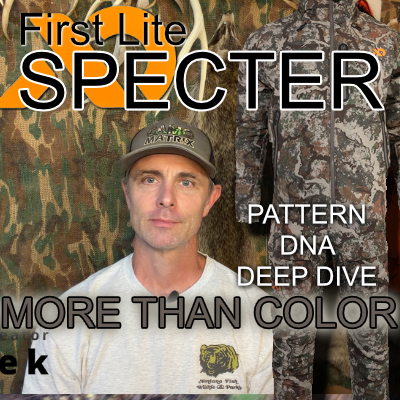
For example, let’s say you want to compare First Lite Specter vs Code of Silence S18 in an east coast forest during early fall. You can load that exact scenario instantly and see how both patterns perform in real conditions.
Specter Vs S18 in the Camo Lab
Or maybe you're chasing pronghorn across a sage desert in western Montana. That’s a completely different environment, and the camo that works there can look very different from what works in eastern timber.
You can even use the Camo Lab right from your phone in the field. As you move into your stand or setup, snap a quick photo of your surroundings and test different camo patterns on the spot. Scroll through hundreds of options and see how they perform in the exact position and conditions you're hunting in.
- Hardwood timber
- Open fields
- Brush and edge cover
- Snow and late-season terrain
Many of these backgrounds have also been contributed by hunters themselves, helping build a more realistic and diverse testing environment.
You can also upload your own hunting photo and instantly test different camo patterns directly in your environment.
If you choose to share your photo with the community, only limited information is stored:
- Your state (not your exact location)
- The time of year (for seasonal context)
- The type of environment
Your exact hunting spot is never stored or shared.
Your data stays general — your location stays private.
This allows hunters to learn from each other while protecting the places that matter most.
Final Takeaway
The best camo isn’t:
- The most expensive
- The most popular
- The most realistic
It’s the one that disappears in your environment.
And now, you can actually test that instead of guessing.