Steep Shots, Close Encounters, and the Hardest Bow Shots You’ll Ever Face
Most bowhunters think the hardest shots are long ones.
Forty yards. Fifty yards. Wind. Distance. Those shots demand confidence and practice—but they aren’t the shots that cause the most misses or wounded deer.
The most difficult shots a bowhunter will ever face happen when the deer is too close.
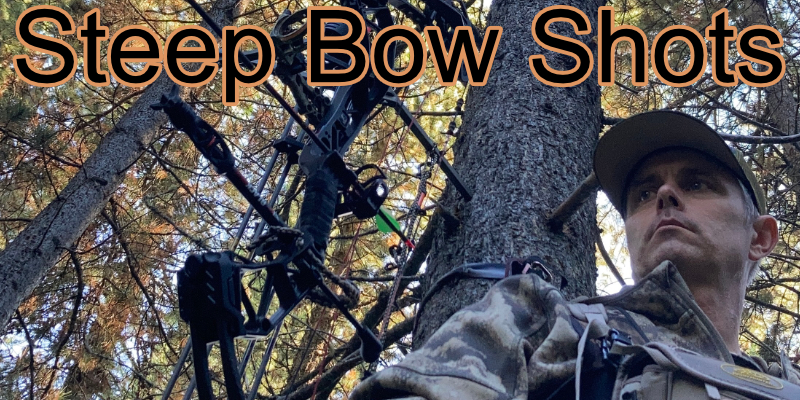
Over decades of hunting from tree stands, Eddie Claypool learned this lesson the hard way. The heartbreak didn’t come from deer just out of range. It came from deer standing directly below him—close enough to touch, yet positioned at an angle that turns instinct against you.
Why “Too Close” Is Harder Than “Too Far”
When a deer is standing five yards from the base of your tree, your brain tells you the shot is automatic. The pin looks steady. The target fills the sight picture. Everything feels easy.
It isn’t.
At steep downward angles, bow pins don’t behave the way most hunters expect. Pins are calibrated for horizontal distance, not vertical drop. As the angle steepens, arrows impact higher than intended—sometimes dramatically so.
Eddie found that shots taken nearly straight down could impact five to six inches higher than expected, even when the horizontal distance was only a few yards. That’s enough to turn a perfect-looking shot into a miss or a poor hit.
Why This Shot Breaks So Many Hunters’ Hearts
Steep shots combine multiple problems into one moment:
- Awkward body position
- Limited ability to bend at the waist
- Extreme angle compression
- Reduced margin for error
Under pressure, hunters often aim where they think the arrow should go—not where it will go.
Many experienced hunters quietly admit they’ve lost more deer from shots that were too close than shots that were too far. The difference is that close-range misses feel unforgivable—and they linger.
Vertical Distance Changes Everything
The physics don’t matter nearly as much as the reality.
When shooting steeply downward, the effective horizontal distance is shorter than the line-of-sight distance your rangefinder shows unless it compensates for angle. That compression causes the arrow to hit higher than expected relative to the aiming point.
Eddie didn’t learn this from theory. He learned it from failure.
After missing multiple mature bucks from nearly straight-down shots, he shut everything down and practiced. He climbed high, set targets close to the base of the tree, and shot repeatedly until the results were undeniable.
Once he understood how much lower he needed to aim, the problem stopped.
You Must Practice the Shot You’re Afraid Of
Most bowhunters practice comfortable shots—15 to 30 yards, level ground, perfect form.
Very few practice:
- Five-yard shots
- Extreme angles
- Straight-down shots
Yet those are the shots that show up without warning during real hunts.
Practicing steep shots teaches you:
- How much to drop your pin
- How your bow behaves at extreme angles
- How your body position affects accuracy
It also builds confidence, which matters more than mechanics when a deer is standing directly beneath you.
Aim for the Exit, Not the Entry
One of the biggest mistakes hunters make on steep shots is aiming for the entry point.
At extreme angles, arrows don’t travel through the deer the way they do on level shots. Visualizing the exit point—especially on shots nearly vertical—helps correct for the angle and ensures the arrow passes through vital areas.
Eddie learned to aim lower than instinct told him to, often favoring the side of the deer closest to the tree rather than the center of the back. It felt wrong—until it worked.
Modern Tools Help, but They Don’t Replace Practice
Modern rangefinders that compensate for angle remove some of the guesswork. They’re valuable tools.
But no device replaces understanding how your own bow, anchor point, and shooting form behave at extreme angles. Technology can inform your decision—it can’t make it for you.
Confidence comes from repetition, not equipment.
Sometimes the Smartest Shot Is No Shot
Perhaps the most important lesson of all: not every close-range opportunity is a good shot.
If your footing is unstable, your body position is compromised, or the angle doesn’t allow a clean path through vitals, letting the deer walk is often the right decision—even when it’s painful.
Experience teaches restraint. Ethics demand it.
Why This Lesson Matters
Steep-angle shots are rare enough that many hunters never practice them—but common enough that nearly every bowhunter eventually faces one.
Understanding how your bow behaves at extreme angles protects the deer, your confidence, and your reputation as a hunter.
The hardest shots aren’t the long ones.
They’re the ones that feel easy—until they aren’t.